South Australia’s algal bloom crisis:
a warning we can’t ignore
From March 2025, South Australia’s coastline experienced a devastating harmful algal bloom (HAB), a heartbreaking and visible sign of distress in our marine ecosystems. According to SARDI the metropolitan coastline of South Australia has recorded zero or low levels of the algae associated with the bloom, Karenia since February 2026, however there are elevated levels in pockets of the Eyre and Yorke Peninsula of the algae found as recent as late July, 2026.
Beginning in March 2025, the bloom eventually stretched across more than 20,000 km² and impacted life to depths of 30 metres. The HAB resulted in the death of approximately 1 million marine animals of more than 600 species, including fish and invertebrates, sharks and rays and the iconic leafy and weedy sea dragons. It transformed once-thriving underwater ecosystems into barren seascapes. For divers, scientists, the fishing industry and coastal communities, the loss continues to be deeply personal and profoundly troubling.
Every winter, up to a quarter of a million giant cuttlefish gather in the shallow waters off Whyalla, SA, for one of the ocean’s most extraordinary natural spectacles: a frenetic, colourful mating aggregation found nowhere else on Earth. This year, divers report finding the reefs largely empty. Local operators have cancelled bookings and turned tourists away, and bans have come into effect to give any late-arriving cuttlefish the chance to breed undisturbed. While research is ongoing to determine the reason for the cuttlefish no-show, it is likely that last year’s algal bloom either directly affected the cuttlefish population, or diminished the food source they depend on.
While algal blooms can occur naturally, leading scientists have highlighted this crisis was fuelled by a combination of human-driven pressures: a prolonged marine heatwave caused by climate change, with water temperatures 2.5 °C warmer than usual, combined with relatively calm marine conditions with little wind and small swells, in nutrient-rich waters. Researchers confirmed the mass mortality was driven by Karenia cristata, a rare species that exhibits stronger toxic effects than any previously studied harmful algal bloom species.
These interacting forces are not random: they are symptoms of a system under stress, and they will only become more common if we continue on our current emissions trajectory.
From algal blooms and fish kills in the south to coral bleaching and ecosystem collapse on the Great Barrier Reef and Ningaloo, we are witnessing the same patterns unfolding in different ways around the continent: warmer waters, weaker protections and a political system still failing to confront the root cause: fossil fuel dependence.
This is why AMCS is calling for:
A rapid phase-out of fossil fuels, including a ban on new coal, oil and gas projects that are warming our oceans and fuelling extreme events;
Sustained funding to conduct comprehensive species audits, protect vulnerable marine life (such as giant Australian cuttlefish, coastal stingarees and Australian sea lions) from compounding threats and fund long-term habitat recovery.
We stand with South Australia’s ocean communities – the First Nations people, divers, artists, educators, scientists and fishers who witnessed this disaster firsthand and helped to sound the alarm. Their grief is shared, and their calls for action must be heard.
We still don’t know the extent of the damage or how long recovery may take. But we do know what’s driving this disaster – and we know what’s needed to turn the tide. Australia has the tools to build a safer, cleaner and more resilient future. But only if we act with the scale and urgency this moment demands.
The story of this algal bloom cannot end with silence, inaction or hand-wringing. It must drive political will to confront the climate crisis, build resilience for our vulnerable wildlife, and protect what still remains beneath the surface before it’s too late.
Learn more:
South Australia’s harmful algal bloom: what we know, what we’re learning from the Great Southern Reef Foundation.
Voices from the frontline:
“It became painfully real for me back on March 22 when I had to include a warning to watch for brown foamy water in a pre-snorkel risk assessment for a community event at Second Valley. We thought the bloom had passed. But then it hit KI, and I began tracking it on NASA satellite images as it crept across the gulf toward Yorke Peninsula. We all know what followed.
On March 29, I found myself holding back tears while explaining the marine deaths on the lower Fleurieu to a group of 13 to 15-year-old dive students. Now, three months later, I, and so many others, feel completely numb. This bloom has been like an underwater bushfire, wiping out life in its path. The ecological loss is massive, but so is the emotional toll. It’s affecting the mental health of ocean lovers, scientists, divers, and communities who feel helpless watching this unfold.”
Carl Charter – a local underwater photographer and co-founder of Experiencing Marine Sanctuaries (EMS), has been documenting the devastating effects of the harmful algal bloom across South Australia’s marine parks. Carl is calling for greater public awareness of the crisis, alongside stronger monitoring and improved management of nutrient inputs from the Murray-Darling Basin.
Before and after: Edithburgh Jetty, South Australia
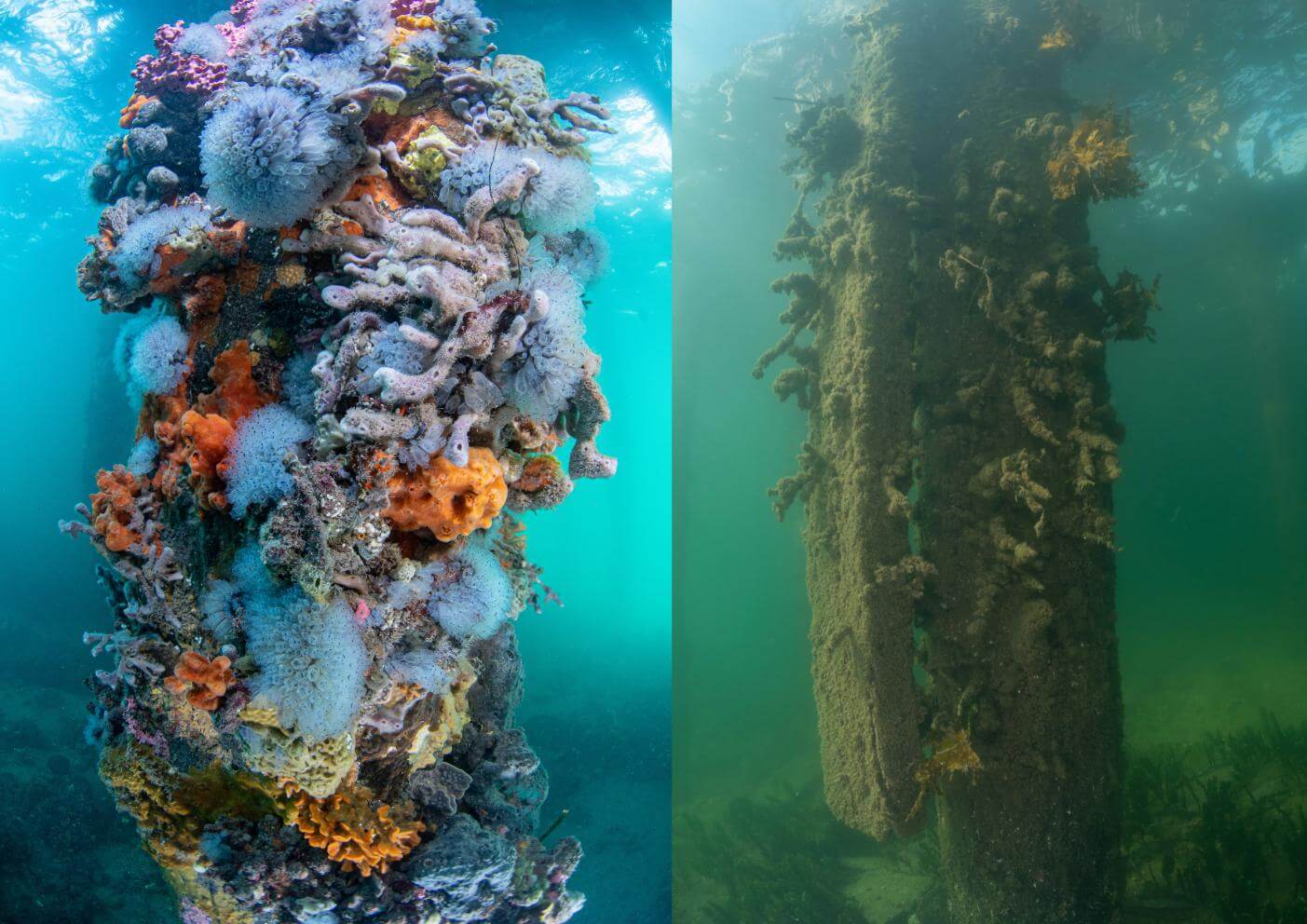
Image credit: before image by Carl Charter and after image by Paul Macdonald and Elizabeth Solich.
These powerful photographs document the stark transformation of Edithburgh Jetty’s underwater pylons, a once-thriving vertical reef now stripped bare by the devastating bloom.
The “before” images show a vibrant underwater ecosystem cloaked in soft corals, sponges, tunicates, and ascidians, home to sponge crabs, leafy and weedy seadragons, nudibranchs, molluscs, and dozens of fish species.
The “after” images reveal a haunting absence, bare pylons where life once flourished, smothered or starved by the bloom.
This loss is more than visual, it represents a collapse in biodiversity, habitat, and ecosystem function. What took decades to grow was wiped out in weeks.
A sobering reminder of how nutrient pollution and climate extremes can unravel even our most iconic marine habitats.
Before images by Carl Charter and after image by Paul Macdonald and Elizabeth Solich.
Before and after: Claris Wreck, South Australia

Image credit: before image and after image by Mark Tozer.
“We want people to understand what’s being lost beneath the surface,” Tozer said.
Actions you can take now:
Australia urgently needs to establish a national wildlife resilience fund of $200 million to invest in threatened wildlife populations, with a focus on protection and recovery efforts, to minimise the impacts of threats such as harmful algal blooms or bird flu on our wildlife.
Add your voice to the Great Southern Reef Foundation formal submission. They’re collecting statements from community members, coastal residents and any concerned Australians to present directly to South Australian and federal decision makers:
SA Algal Bloom Response – Public Concern Submission Form
Dive Deeper
Science of the Algal Bloom – Webinar Recording from Port Environment Centre
Algal Bloom Kangaroo Island January 2026 Update:
With new reports of the South Australian harmful algal bloom affecting the southern Yorke Peninsula and the northwest of Kangaroo Island, GSRF Creative Director Stefan Andrews travelled to Kangaroo Island to support on-the-ground documentation with Research and Discovery Kangaroo Island (RADKI). With accounts of dead and dying fish and rapidly declining water clarity, expectations were low and uncertainty high. In this video find out what was seen beneath the surface.
Credit: https://greatsouthernreef.com/
Media Assets:
This page provides access to imagery and footage documenting the recent harmful algae bloom impacting South Australia’s coastal waters. These visuals are available for editorial use in coverage relating to the environmental event, its impacts, and the response efforts.
Please credit all images and video as: Stefan Andrews courtesy Great Southern Reef Foundation.
Media enquiries: [email protected] or 07 3886 5891