One of the most memorable and disruptive events to face the waste industry in Australia in recent years is the collapse of REDcycle in 2022 – Australia’s voluntary soft plastic collection and recycling scheme. Since then, the topic of soft plastic packaging is often discussed in the waste, packaging, food and beverage, and retail industries.
REDcycle collapse exposed the fact that corporations are using too much disposable plastic packaging.
Just a small proportion of the soft plastics used each year were being collected for recycling. The scheme only collected around 7,000 tonnes of an estimated 356,735 tonnes of soft plastic used by households.¹ Yet, nearly 3 years on, we’re no closer to seeing a much needed reduction of soft plastic packaging in Australia’s supermarkets.
For 2 years in a row, our audit report ‘Unwrapped’ also showed that it’s costing customers more to avoid plastic packaging and buy loose fresh fruit and veggies.
So what has been happening since REDcycle’s collapse in late 2022?
Confusing messages
When the soft plastic collection scheme was operational, own-brand packaging from Coles and Woolworths proudly touted REDcycle labels and claims of 100% recyclability, alongside a ‘return to store’ Australasian Recycling Label or ARL.
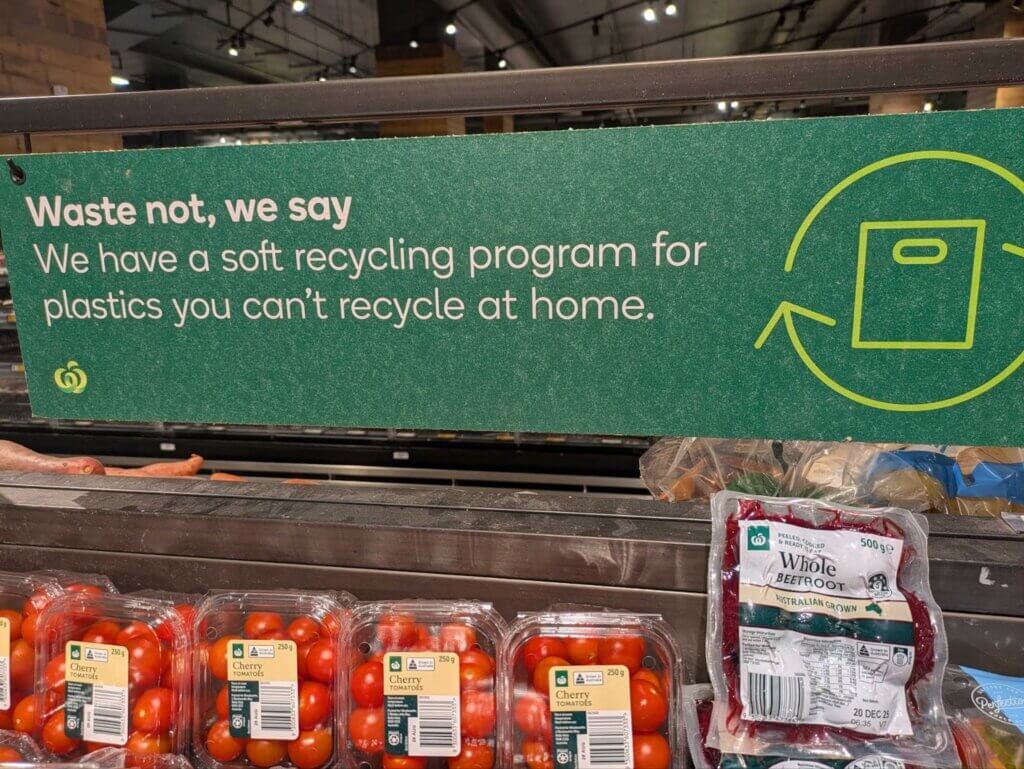
The big supermarkets proudly touted REDcycle labels and claims of 100% recyclability before the scheme’s collapse in 2022.
Supermarkets have been slow to update the ARL on their packaging. A ‘check locally’ label was developed in response to updated guidelines for the recyclability of soft plastic packaging. In May 2024, supermarkets were told by the Australian Packaging Covenant Organisation (APCO) that still displaying the REDcycle logo and the ‘return to store’ ARL was ‘misleading’ for customers.
Soft plastic packaging still displays various different labels. Recommended disposal messages are inconsistent and examples of the misleading ‘return to store’ labels on supermarket own-brand packaging continue, even in stores where soft plastic collection is not available!
Now what?
When news broke about REDcycle’s stockpiles of soft plastics in warehouses around the country, Woolworths, Coles, and ALDI formed a taskforce. Its intended goal is to manage the backlog of collected soft plastics, and get collections and recycling underway again.
In recent months, soft plastic collection trials have expanded. We now have a new proposed soft plastic scheme on the horizon: the Soft Plastic Stewardship Australia (SPSA).
SPSA aims to turn ‘soft plastic into a valuable resource’. It is asking permission from the ACCC to allow big brands like the major supermarkets and food and beverage brands to work together to collect and recycle soft plastics in Australia.²
The SPSA needs approval from the ACCC because its proposed actions wouldn’t be legal under the Competition and Consumer Act 2010, which aims to protect consumers and promote fair trading and competition.
So what’s the problem?
Plastic pollution is one of the most urgent environmental crises of our time. It harms marine ecosystems and is increasingly being linked to human health issues.
Research shows us there is a direct relationship between the amount of plastic produced and the amount of plastic pollution.³ Even though it’s widely known that recycling is not the solution to our waste crisis, we have become so reliant on plastic that people are desperate to find a ‘silver bullet’ – some solution that means we can continue to use plastic however and wherever we want.
The SPSA, a not-for-profit, is proposed to be run by a board of directors. Currently, this includes employees from Coles, Woolworths, Mars Food Australia, Nestle, and McCormick Foods. The companies who are producing massive amounts of soft plastic packaging are running an organisation to collect and recycle soft plastic packaging into things like garbage bags, fence posts, road base, and concrete additives.
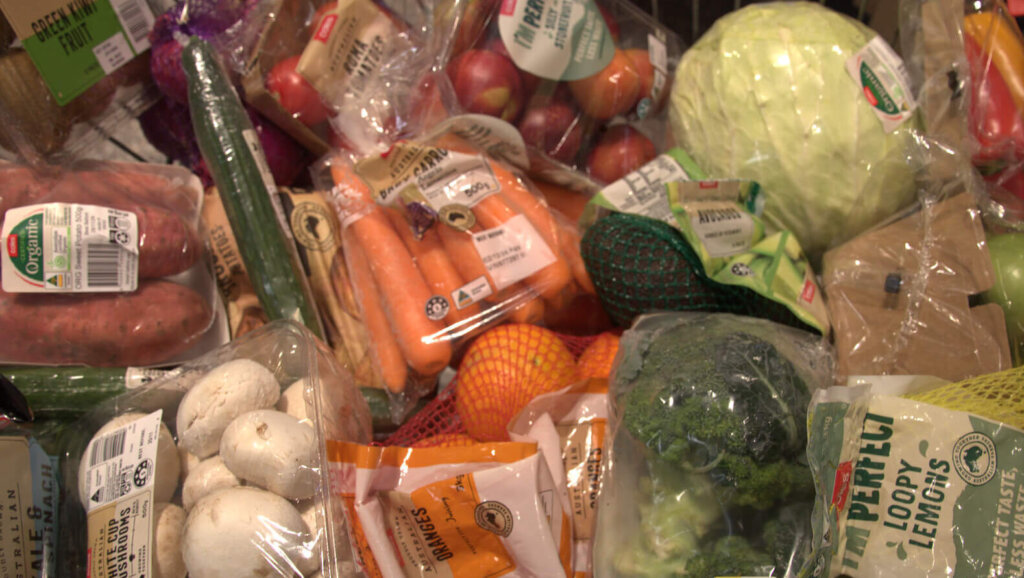
Our ‘Unwrapped’ audit reports in 2022 and 2023 showed it’s costing customers more to avoid plastic packaging by buying loose fresh fruit and veggies.
Being a member of the scheme means these companies will have to pay a levy on the soft plastic packaging they place on shop shelves.
Those funds will go towards managing the cost of collecting, sorting, and recycling the plastic packaging.
The scheme levy is currently proposed to be $160 per tonne of soft plastic packaging, a fraction of the cost charged for the same amount of soft plastic in other countries.
What’s more, these companies are allowed to pass the cost directly to their customers through the products they buy. The companies may not be at all financially responsible for the amount of plastic packaging they’re creating, providing no financial incentive for them to reduce the amount of plastic packaging they create every year.
What’s the solution?
Without a significant reduction in the volume of soft plastic packaging placed on our supermarket shelves, these recycling schemes will fail to reduce plastic pollution in our environment. A system focused only on recycling (including design for recycling, scale up of collection, sorting and processing infrastructure) would still result in 570kg of plastic waste flowing into the world’s oceans every second.⁴
This means in order to end plastic pollution, we must cut the amount of disposable plastic packaging being produced and used.

A young Pacific gull picks at soft plastic while feeding on a beach in South Australia.
Whilst recycling is an important part of a circular economy, it’s receiving a disproportionate amount of focus and resources, when the core of the issue is being ignored – that there is far too much single-use plastic packaging being used.
Instead, we urge the major supermarkets and brands to collaborate on introducing wide-spread reusable and refillable packaging, as we’ve seen in two recent successful trials in the UK.⁵
Here in Australia, we need high ambition from the federal government and big business to take strong action that reduces our reliance on unnecessary and excessive plastic packaging.
Help us hold the major supermarkets accountable for their contribution to plastic pollution in Australia by signing the petition now.
References
- APCO (2024). Flexible plastic consumption and recovery 2021-22 – factsheet.
- ACCC (2025). Soft Plastic Stewardship Australia Limited.
- Cowger, W. et al (2024). Global producer responsibility for plastic pollution.
- The Pew Charitable Trusts and SYSTEMIQ. (2019). Breaking the Plastic Wave.
- The Refill Coalition (2025). The Refill Coalition trials: Key learnings for industry.