Most Australians will never get the chance to visit Scott Reef. It sits almost 300 kilometres off the Kimberley coast in Western Australia, far from any town or tourist route.
But after the privilege of diving there recently, I can share firsthand that it’s one of the most extraordinary places in our ocean, every bit as awe-inspiring as the Great Barrier Reef, if not more.
On my first dive, I drifted along a plunging vertical wall lined with pastel corals, vibrant sea fans and giant barrel sponges with thousands of glass fish shimmering around me. Then an endemic dusky sea snake, a species found nowhere else in the world, appeared. Moments like this leave you with a lasting sense of wonder. They’re a vivid reminder of how rare, fragile and irreplaceable these ecosystems are.
To our surprise and relief, the reef was thriving. Despite a bleaching event in recent years, Scott Reef had bounced back. It was flourishing, full of life. That recovery should give every Australian hope: reefs can endure if they’re given the breathing room they need to do so.
And that is exactly why I’m deeply concerned right now.
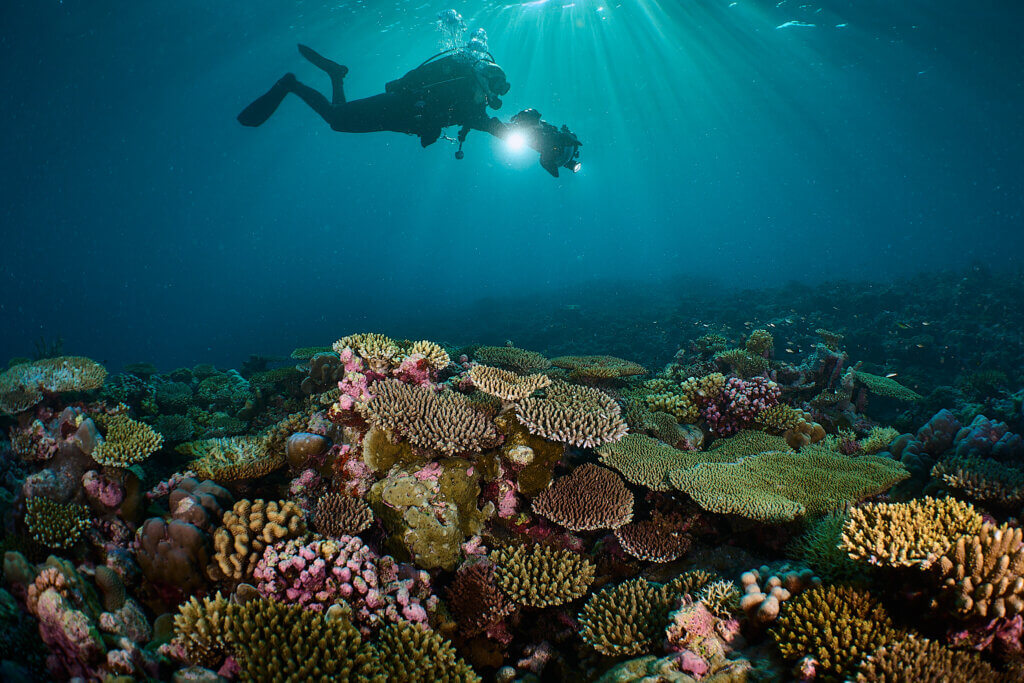
Thriving Scott Reef.
Oil and gas giant Woodside is proposing to drill for gas near Scott Reef.
During our trip, we positioned our vessel directly over the coordinates of the closest proposed well site, around 3km from the edge of the reef. When I looked at the aerial drone image later, the proximity was shocking. If a proposal were put forward to drill this close to the Great Barrier Reef, there would be national outrage.
Scott Reef is not the place for industrial expansion. It’s home to endangered pygmy blue whales, rare sea turtles and marine species found nowhere else on Earth. An oil spill would be devastating. Even without a spill, seismic blasting and industrial noise would disrupt migration and feeding grounds for years. And the emissions from this project would contribute to the very warming that threatens coral reefs globally.
I’m not a scientist or an activist. I’m the Co-Founder and Creative Director of Australian fine jewellery brand Sarah & Sebastian, someone who is passionate about the places that define our coastline and identity. After witnessing the beauty of Scott Reef, I find it hard to comprehend why we would put such a remarkable ecosystem at risk.
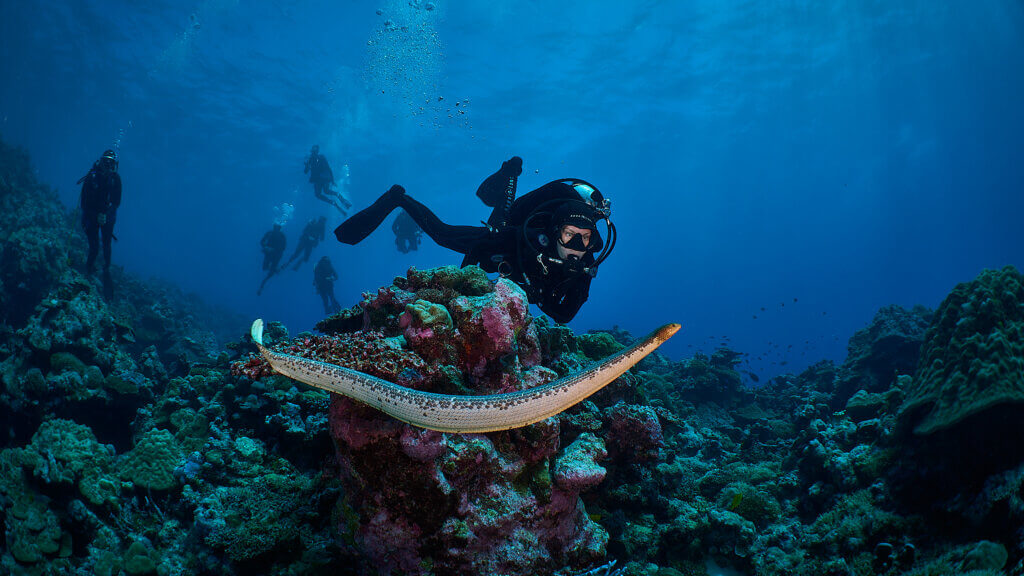
Sea snake spotted at Scott Reef.
Scott Reef might be out of sight for most people, but that doesn’t make it any less important.
It’s part of Western Australia’s natural heritage, something we should protect with the same pride we place in Ningaloo, the Kimberley and Rottnest.
We’re living in a time when global interest in WA’s resources sector is only increasing. That’s not going to change. But we need to be clear-eyed: not every square metre of ocean is appropriate for drilling. Some places are simply too precious, too unique and too valuable in the long term to gamble with. Scott Reef is one of them.
Decisions about our environment and our future are often framed as either/or: jobs or nature, development or protection. But that’s a false choice. Western Australia can continue to be a world leader in energy while also safeguarding the ecosystems that make this state unlike anywhere else. We’ve done it before. We can do it again.
Scott Reef is wild, ancient and irreplaceable. It belongs not just to us, but to every generation that comes after us. And once we damage something like this, we don’t get a second chance.
—
Author: Sarah Gittoes.
Image credit: Sarah & Sebastian.